
One of the most important sources of any country’s legal system is its legal doctrine and the scholarly opinions of its legal experts. When legal issues and questions are examined through rigorous study, scientific discussion, and a vibrant academic environment that encourages research and the development of legal theories, legal knowledge and scholarship are enriched. These scholarly contributions also enable legislative and judicial authorities to benefit from legal research, influencing the enactment and amendment of laws as well as court rulings.
In this way, legal scholars help shape appropriate legal responses by anticipating or identifying social, economic, and political developments, issuing warnings, proposing solutions, and examining their theoretical foundations. At the same time, by monitoring the practical experience of implementing national laws and regulations and assessing their effectiveness in achieving objectives such as order, justice, and peace, they critically evaluate the existing legal framework and propose ways to improve and advance the legal system.
These efforts can contribute to a more dynamic and effective national legal system and enable it to play a constructive role in advancing the country toward the well-being of its people. Accordingly, examining current laws and regulations, identifying deficiencies in the prevailing social and administrative order, clarifying ambiguities and addressing substantive and procedural shortcomings in Iran’s legal system, studying other national legal systems, and exploring international law can all make significant contributions to identifying and remedying weaknesses while strengthening the system’s existing advantages.
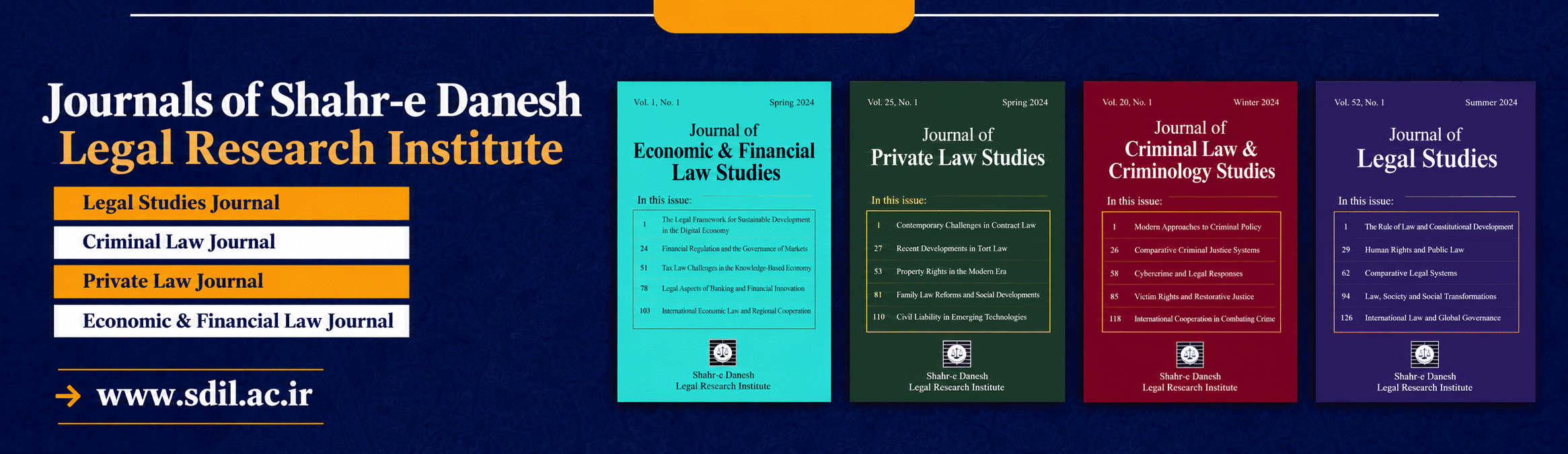
Recognizing this fundamental principle, Shahr-e Danesh Legal Research Institute has made the regular publication of specialized journals dedicated to legal studies and research one of its primary objectives.
The Institute began its publishing activities with the Journal of Legal Research. First published in 2002, this biannual journal received the academic–promotional classification from the Commission for Scientific Journals in 2005. In response to growing interest among researchers and an increase in article submissions, it became a quarterly publication in spring 2018, beginning with Issue 33.
The Journal of Criminal Law and Criminology Research has been published biannually since 2013. With contributions from researchers, professors, lawyers, judges, and outstanding postgraduate students specializing in criminal law and criminology in Iran and abroad, each issue seeks to present new scholarly findings from Iran and other countries. These findings are drawn from research projects, graduate theses and dissertations, academic studies, research conducted by national and international organizations, conferences, and other scholarly activities.
The journal covers a broad range of research, including fundamental, applied, analytical, and critical studies; scholarly book reviews; developmental research; and the presentation of original theories, theoretical approaches, or new methods for addressing problems and advancing knowledge in criminal law and criminology. It aims to advance the frontiers of these disciplines and contribute to a more effective criminal justice system in promoting order, justice, and peace. In 2013, the journal was recognized as a scientific research publication by the Commission for Scientific Journals of Iran’s Ministry of Science, Research and Technology.
Under the regulations issued by the Ministry of Science, Research and Technology on April 29, 2019, all journals, including the Journal of Legal Research and the Journal of Criminal Law and Criminology Research, are classified as scientific journals and are evaluated and ranked annually. From 2019 through 2021, Shahr-e Danesh journals achieved Grade B.
Articles Published in Shahr-e Danesh Journals
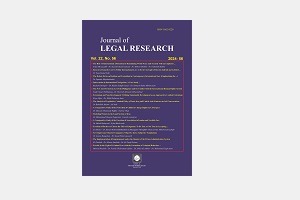
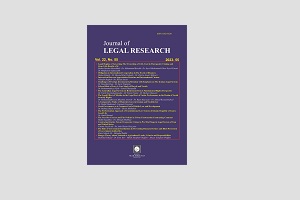
Journal of Legal Research
According to the Office of Research Policy and Planning of Iran’s Ministry of Science, Research and Technology, and based on the latest evaluation and ranking of academic journals, the Journal of Legal Research has achieved Grade B.
Published in collaboration with the Iranian Association of Administrative Law under a formal memorandum of understanding, the journal draws on contributions from researchers, professors, lawyers, judges, and postgraduate law students. In addition to addressing pressing legal issues in Iran, it seeks to provide readers with valuable research and translations across various areas of law that contribute to the advancement of the country’s legal system.
The journal adheres to the guidelines of the Committee on Publication Ethics (COPE).
The journal is indexed in the following databases and scholarly platforms:
-
Islamic World Science Citation Center (ISC)
-
Noormags (Noormags)
-
Magiran (Magiran)
-
Google Scholar (Google Scholar)
-
Directory of Open Access Journals (DOAJ)
-
Academia.edu (Academia)
-
Index Copernicus (Index Copernicus)

How can I submit an article to the journal? Through the “Author Guidelines” section on the Journal of Legal Research website.


Journal of Criminal Law and Criminology Research
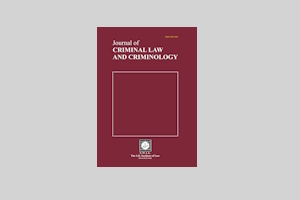
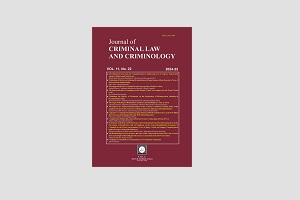
With contributions from researchers, professors, lawyers, judges, and outstanding postgraduate students specializing in criminal law and criminology in Iran and abroad, the journal aims to publish new scholarly findings from Iran and other countries in every issue. These findings are drawn from research projects, academic studies, graduate theses and dissertations, research conducted by national and international organizations, conferences, and other scholarly activities.
The journal covers a wide range of research, including fundamental, applied, analytical, and critical studies; scholarly book reviews; developmental research; and original theories or innovative methods for addressing problems and advancing knowledge in criminal law and criminology. All submissions are expected to demonstrate originality and innovation. The journal seeks to advance the frontiers of these disciplines and contribute to a more effective criminal justice system in promoting order, justice, and peace.
According to the Office of Research Policy and Planning of Iran’s Ministry of Science, Research and Technology, and based on the latest evaluation and ranking of academic journals, the Journal of Criminal Law and Criminology Research has achieved Grade B. The journal is published in collaboration with the Iranian Association of Criminal Law and the Iranian Association of International Criminal Law under formal memoranda of understanding.
The journal adheres to the guidelines of the Committee on Publication Ethics (COPE).
The journal is indexed in the following scholarly databases and platforms:
-
Islamic World Science Citation Center (ISC)
-
Noormags (Noormags)
-
Magiran (Magiran)
-
Google Scholar (Google Scholar)
-
Academia.edu (Academia)
-
Index Copernicus (Index Copernicus)
How can I submit an article to the journal? Through the “Author Guidelines” section on the Journal of Criminal Law and Criminology Research website.


Private Law Research Journals
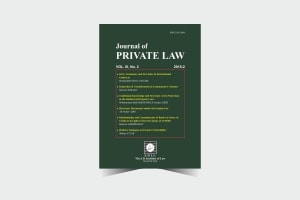
The Journal of Private Law Research began publication in 2013 as a specialized, biannual academic journal dedicated to scholarly research.
With contributions from researchers, professors, lawyers, judges, and students pursuing advanced studies in the various fields of private law, each issue aims to present new scholarly findings from Iran and other countries. These findings are drawn from research projects, graduate theses and dissertations, academic research, studies conducted by national and international organizations, conferences, and other scholarly activities.
The journal publishes a broad range of scholarly work, including fundamental, applied, analytical, and critical research; academic book reviews; developmental studies; and original theories or innovative methods for addressing problems and advancing knowledge in private law. All contributions are expected to demonstrate originality and innovation.
The journal seeks to advance the frontiers of knowledge across the various fields of private law, with the aim of strengthening their effectiveness in promoting order, justice, peace, and public well-being.


Financial and Economic Law Research Journals
The biannual Journal of Financial and Economic Law Research commenced publication in 2023 under License No. 92130 issued by Iran’s Ministry of Culture and Islamic Guidance. The journal promotes interdisciplinary scholarship at the intersection of law and related fields and accepts and publishes scholarly articles in the following areas:
-
Securities Law and Stock Market Regulation
-
Money Market Law and Banking Law
-
Insurance Law
-
Competition Law
-
Privatization Law
-
Accounting, Auditing, and Computational Law
-
Budget Law, Tax Law, and Public Finance Law
-
Law and Development Economics, Financing, and Investment
-
Customs Law, Free Trade Zones, and Special Economic Zones
-
Foreign Investment Law
-
Business, Trade Associations, and Commercial Enterprise Law; Legal Barriers to Business
-
Economic and Financial Analysis of Law; Legal Analysis of Economics and Finance
-
International Financial and Economic Law
-
Socioeconomic Law and Poverty Alleviation Law
-
Policy-Making, Legislation, and Regulation in Financial Markets
-
Financial and Economic Law of Knowledge-Based Enterprises
-
Jurisprudential Foundations of Financial and Economic Law
-
Reviews of Books, Laws and Regulations, Articles, and Scholarly Works in Financial and Economic Fields
-
Other Areas of Financial and Economic Law
How can I submit an article to the journal? Through the “Author Guidelines” section on the website of the Journal of Financial and Economic Law Research.